“They Work for Us”: Learning about Civic Engagement in Washington, D.C.
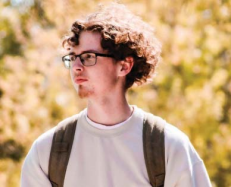
 Jakob Lucas is a junior at Texas City High School and a freshman at College of the Mainland, attending both in a dual-credit program. Jakob loves writing, volunteering, and traveling. Upon high school graduation, he plans on attending a major university to study global politics and international law. He is a 2014 alumnus of the Institute’s Student Legislative Seminar program.
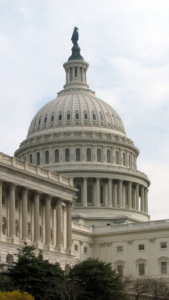
Every school year, the Institute for Civility in Government sends a representative to Texas City High School to lead a group of high school students to our nation’s capital. While there the group visits cultural landmarks like the Kennedy Center and the Washington National Cathedral, important political locations such as the White House and the Capitol, and well-known attractions and locations such as the Lincoln Memorial, the Smithsonian museums, and the Washington Mall. The trip is not something unique to my hometown of Texas City. In fact, around the state, the Institute reaches out to political clubs and other communities within high schools and picks a handful of students who seem willing to learn and explore.
For our small high school, I am the president of the Young Americans for Liberty club, a libertarian-leaning organization dedicated to raising awareness of the effect that government and politics has on our personal lives, our school, and our city. As this year began, I realized that most of the YAL members last year, who voted for me to become president, were seniors and now out of high school! Ever the optimist, I was determined to view this as a fresh start for the club. By the time the Institute came knocking to talk about the trip once again, we had ten capable members ready to travel and learn from the Institute for Civility in Government.
The Institute’s goal: bringing civility back into the politics of our nation. The Institute’s hope: that bringing civility back into our national conversation will help some of our nation’s most prominent problems.
Institute co-founder Tomas Spath has been Texas City’s guide for years, and at the very start of the trip he made it clear just what civility is, by having us write it down several times in the notebooks provided by the Institute to document our trip.
With our varied group of outcasts, band geeks, dancers (or “Stingarettes” as we call them on our football field), and political nerds, the words:
“Civility = claiming and caring for one’s identity, needs and beliefs without degrading someone else’s in the process”
were written in very different styles and handwriting, with varying levels of legibility.
In Washington D.C., we spent our days with Mr. Spath, riding subways, taking pictures, being tourists and enjoying the trip. Every night though, we departed from the usual tourist experience, as we worked together to decide on three issues that we wanted to talk to our Senator and Congressman about.
Our three issues: Government Spending, Immigration, and Veteran Affairs. And through the Institute, we were able to meet with the staff of Senator Ted Cruz, and directly with our Congressman Randy Weber, and make our opinions heard.
The situation was enlightening as every member of the Texas City High School group realized just how deep the lack of civility ran in the city of Washington DC, especially when dealing with our issue of immigration.
During our trip, we caught a speech by our very own Texas Senator John Cornyn against President Obama’s executive action over immigration reform. During the speech, Cornyn characterized the President’s negotiation tactics as I want everything I want, or I want nothing, and said that when a person does that [they] always get nothing. The tactic of the speech, to make the President seem incompetent or immature, taught our group the depth of incivility in the speeches and interactions of politicians running our country.
Earlier in the trip we met with financial experts to learn about tax reform, advocates to discuss immigration issues, and leaders of the Veterans of Foreign Wars organization. Equipped with expert data and adding our own opinions and insight, we presented our ideas and solutions to Senator Ted Cruz’s staff and to our Congressman himself, Randy Weber.
It was an amazing realization to see the effect that normal American citizens can have on the political process. Mr. Spath was quick to remind our group that they work for us, and that it is our responsibility to hold our representatives to a high standard.
Unfortunately the day our group feared the most arrived. The day we left DC and went back to Texas. Notice the word, “Texas.” I have known for years that I wanted to work in politics, but the trip changed me in ways I could never foresee.
Growing up, I was taught that my home was Texas. I drew the distinct Texas shape on hundreds of social studies assignments, and maps of the state decorated my house. But my perception of geography completely changed after the trip.
After my trip to our nation’s capital, I felt that despite being born and raised in the Lone Star state, when I returned to Texas I was not going home. I was doing the exact opposite. The Washington DC trip, facilitated by the Institute for Civility in Government, brought me home for the first time in my life. A home that I wish to see again, sometime soon.
Posts by guest authors reflect their own views and opinions, and not necessarily the views and opinions of the Institute for Civility in Government.